Tip: Start typing in the input box for immediate search results.
working with Service Level Agreements (SLAs)
Definition
What is Service Level Agreement (SLA)
A Service Level Agreement (SLA) is a contract between a service provider and a customer that defines the expected level of service. This agreement outlines the services provided, the expected performance levels, and the remedies or penalties if the service provider fails to meet the agreed-upon standards.
Key Components of an SLA:
- Services Provided:
Clearly defines the specific services included in the agreement. - Performance Levels:
Outlines key metrics such as response times, resolution times, availability, uptime, and performance targets. - Remedies and Penalties:
Specifies the consequences if the service provider fails to meet the agreed standards, including service credits or financial penalties. - Monitoring and Reporting:
Details the processes for tracking performance metrics and reporting on service levels. - Dispute Resolution:
Outlines the procedures for resolving any disputes that may arise between the service provider and the customer.
Importance of SLAs:
SLAs are commonly used in maintenance operations and management to ensure that customers receive the agreed-upon services in a timely and cost-effective manner. They play a critical role in setting clear expectations and maintaining accountability.
SLA Templates
SLA Templates are designed to outline the expected service levels between a provider and a client. These templates typically include:
- Terms of Service:
Specific services delivered, performance metrics, and responsibilities of both parties. - Penalties for Non-Compliance:
Clear guidelines on consequences for failing to meet the service levels.
Benefits of SLA Templates:
Foundation for Consistent Service Delivery:
Establishes a structured approach to service management, fostering accountability and trust between clients and providers
Clear Communication:
Helps ensure that both parties understand their roles and obligations.
Setting Realistic Expectations:
Provides a benchmark for service levels that can be agreed upon by both parties.
Foundation for Consistent Service Delivery:
Establishes a structured approach to service management, fostering accountability and trust between clients and providers.
.
Create, View or Edit an SLA
From Planned WORK
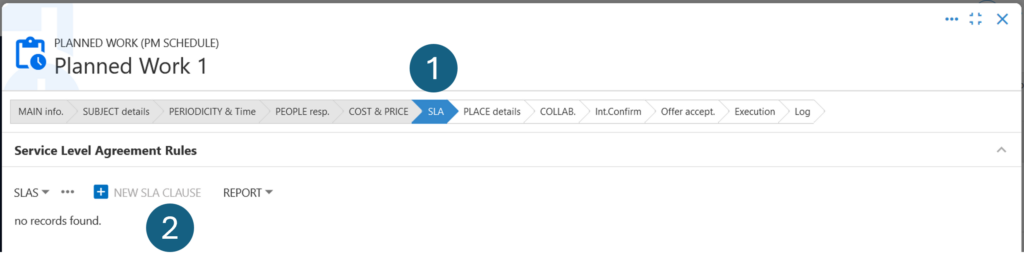
- From the PLANNED WORK form, select the top Tab ‘SLA‘
- From the SLAS list
- Click on NEW to create a SLA
- or, Click (slect) a row in the grid to open an existent SA
From On Demand WORK
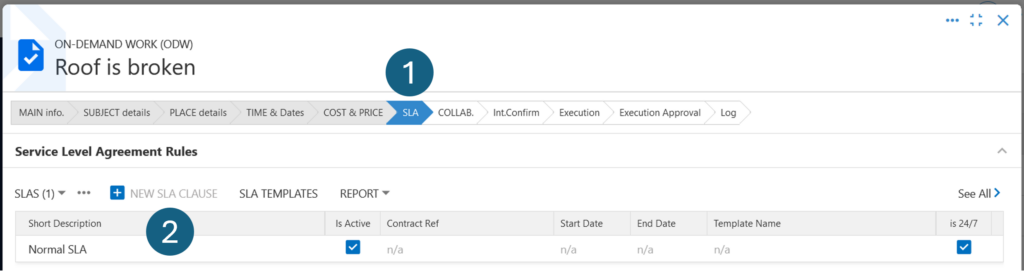
- From the ON DEMAND WORK form, select the top Tab ‘SLA‘
- From the SLAS list
- Click on NEW to create a SLA
- or, Click (slect) a row in the grid to open an existent SA
From ASSET
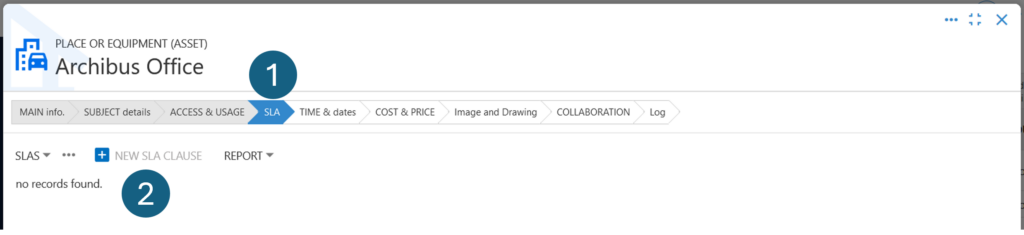
- From the ASSET form, select the top Tab ‘SLA‘
- From the SLAS list
- Click on NEW to create a SLA
- or, Click (slect) a row in the grid to open an existent SA
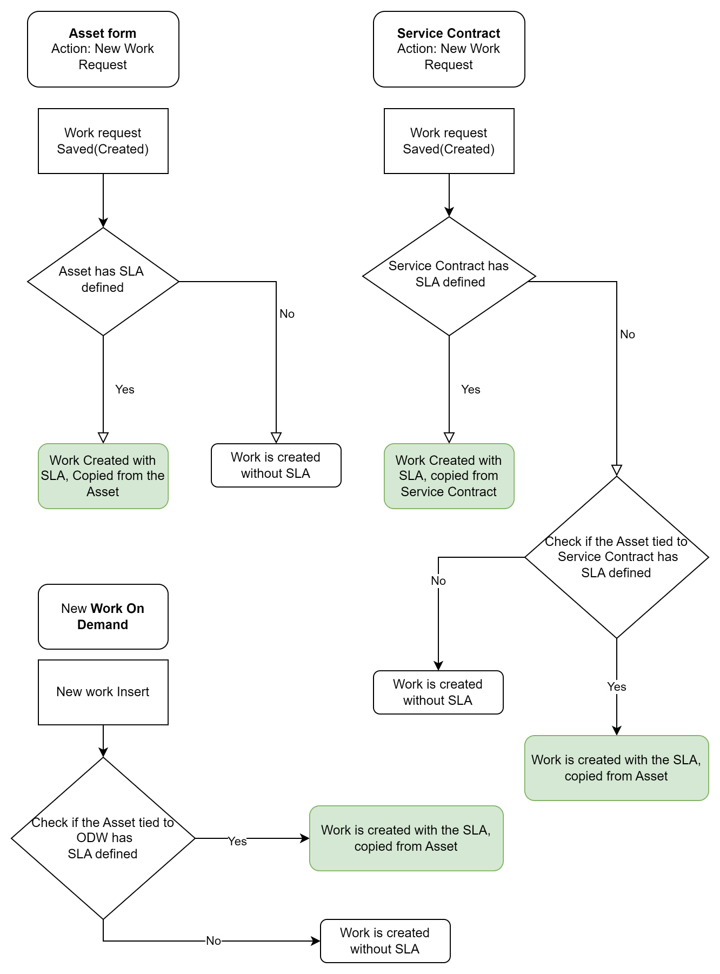
SLA flow (drill-down to WORKs)
SLA flows automatically from ASSET, SERVICE CONTRACT when creating a new WORK